Massages · Decontracting
Decontracting massage
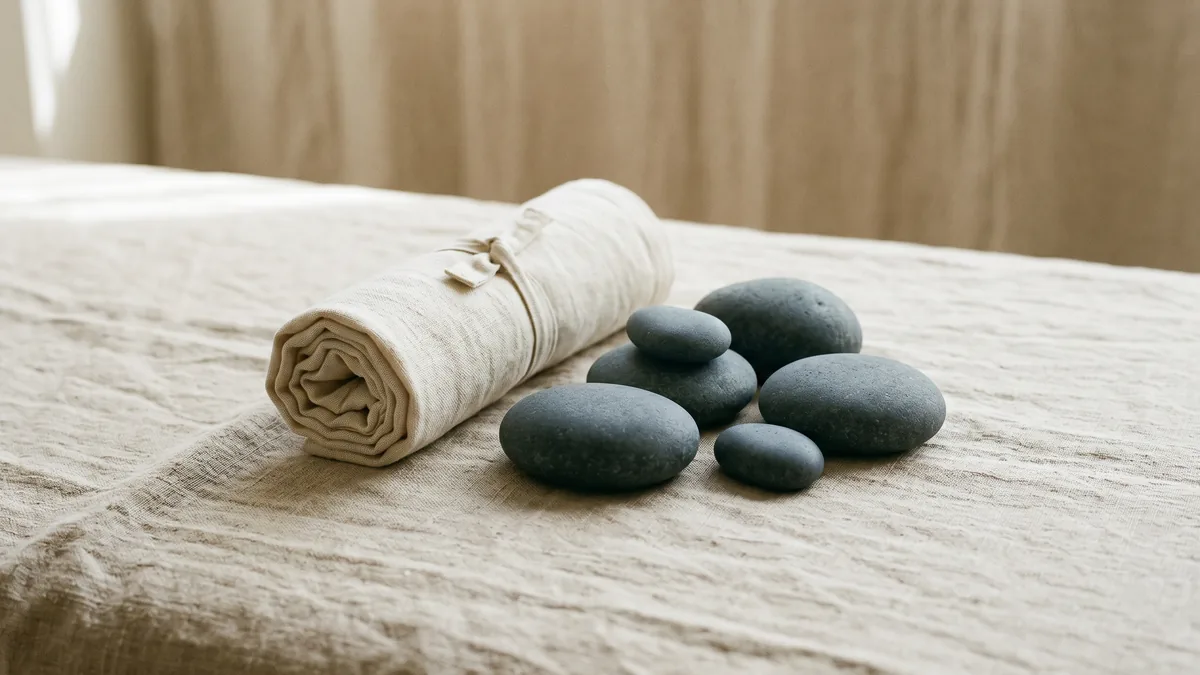
A decontracting massage — known on Barcelona spa menus as 'massatge descontracturant' — uses firmer, more focused pressure to work on areas where muscle tension has built up. Here we explain what it involves, what a session is usually like and what is reasonable to expect from it.
What a decontracting massage is
A decontracting massage is a technique that applies deeper, more directed pressure to specific muscle groups — typically the areas where you feel the most tightness or stiffness. It is one of the most commonly requested sessions in Barcelona wellness centres, often chosen by people who spend long hours at a desk or go through periods of stress and notice their back, neck or shoulders feeling persistently loaded.
The name comes from the Catalan and Spanish term for releasing muscle contractures — localised areas of sustained tension that can make a muscle feel knotted or rigid. You may also hear it called a knot-release massage or a therapeutic massage in English-language contexts. It is not the same as deep tissue massage, which tends to work more systematically through the layers of muscle, and it is not a clinical treatment for injuries. Think of it as a firmer, more purposeful cousin of the relaxing massage, aimed at areas of specific tension rather than general calm.
Although a decontracting massage is more intense than a gentle relaxing session, firm pressure and pain are not the same thing. A good practitioner will calibrate the pressure to your response. If at any point a manoeuvre causes sharp discomfort, it is entirely reasonable — and encouraged — to say so and ask for an adjustment.
What a session is usually like
Sessions typically open with a short conversation about where you are feeling tension, what your daily routine looks like and whether there is anything the practitioner should be aware of. This helps focus the work on the areas that matter most to you.
The massage itself usually alternates between lighter preparatory strokes to warm the tissue and deeper manoeuvres on the loaded zones. Practitioners often use their thumbs, knuckles or forearms to work more precisely into tight areas. Sessions commonly run from around 45 minutes to an hour, though some centres offer shorter focused treatments — for example, a decontracting back massage — or longer full-body sessions.
After the session, it is not unusual to notice the treated area feeling a little sensitive for a day or so, in a way that resembles post-exercise muscle awareness. This usually passes on its own. If you notice marked or persistent discomfort that does not ease off, it is worth mentioning to the centre and, if needed, consulting a health professional.
When it may make sense
Many people seek a decontracting massage when they have been sitting in the same position for long stretches — working at a computer, driving, or travelling — and their back or shoulders feel tight and uncomfortable. Others choose it as a regular part of a self-care routine to maintain a sense of physical ease. Some request it before or after physical activity, when muscles feel particularly loaded.
It can contribute to a sense of wellbeing and may help you feel less tense in the areas worked. These effects are personal and vary from one individual to another: some people notice a significant change straight away, while others experience only a subtle shift or a feeling of general relaxation. A massage session does not constitute a diagnosis and does not replace assessment by a health professional when tension is persistent, recurring or accompanied by other symptoms.
If what you are mainly looking for is to switch off and relax without targeting a specific area, a relaxing massage is likely the better fit. If you want to understand which type suits your situation, the guide to choosing a massage type walks through the main options.
Why muscle tension builds up
The sensation of tight or knotted muscles is very common, and it tends to be linked to everyday factors: hours in a fixed posture, sustained stress, an ergonomically poor workstation setup, or unaccustomed physical effort. In these contexts, a decontracting massage can offer a welcome sense of relief and contribute to feeling more at ease in your body.
That said, if tension keeps returning, it is worth looking at the underlying habits as well: reviewing your posture, your workstation setup and the amount of movement you get during the day tends to matter more in the long run than any single session. And if the tension is accompanied by persistent or intense pain, a formal assessment by a health professional is the most sensible next step — there may be a cause that a massage alone is not the right response to.
Precautions and contraindications
For most people, a decontracting massage is a straightforward, safe experience. However, there are situations where caution is warranted and where it is advisable to check with a health professional before booking: recent injuries or inflammation, acute pain, circulatory or skin conditions in the area to be treated, fever, pregnancy, or any ongoing medical diagnosis. Letting the centre know in advance allows the session to be adapted or, if appropriate, postponed until you have received advice.
Frequently asked questions
Will I notice a difference after one session?
Responses vary considerably. Some people leave feeling noticeably looser in the areas worked; others notice mainly a general sense of ease or mild tiredness. Individual reactions are subjective and no particular outcome can be promised. If your goal is to address a specific and recurring pain, discussing it with a health professional will give you a clearer picture of what is actually going on.
How is it different from a relaxing massage?
A relaxing massage uses lighter, slower strokes over the whole body with the main aim of encouraging calm. A decontracting massage works with more sustained pressure on specific zones of tension. If your priority is to unwind and switch off, the relaxing option usually fits better; if you have a particular area that feels tight and you want it worked more thoroughly, the decontracting one is more likely what you are looking for.
How often can I have one?
There is no universal rule. Some people book a session occasionally when they feel particularly loaded; others include it in a regular wellbeing routine. What works depends on your lifestyle, your body and your preferences. The centre you visit can advise you based on how the first session goes.
Is it suitable for the first time?
Yes, though it is worth mentioning that it is your first massage when you arrive. A good practitioner will check in with you more frequently and make sure the pressure stays within what feels manageable. If you are unsure where to start, the guide on preparing for your first massage covers the basics.
Informative content from massatge.cat, reviewed periodically. It does not replace the advice of a health professional.