Massages · Legs
Leg massage
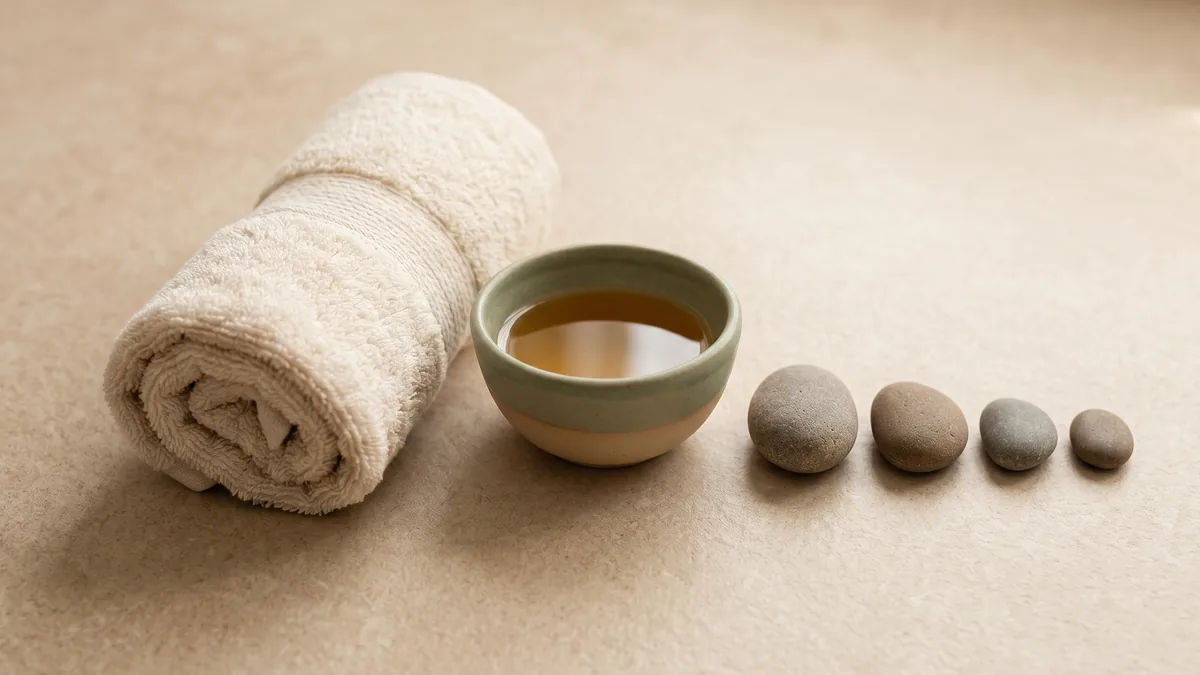
A leg massage is one of the most frequently requested sessions, largely because of the sense of lightness and rest it can leave behind. Here we explain what it involves and what to keep in mind — because the legs are an area where a few circulatory precautions are genuinely worth knowing.
What a leg massage is
A leg massage is a session focused on the lower body: calves, thighs and, in many cases, the feet as well. The therapist works with light or medium pressure, often using long upward strokes and an oil or cream to help the hands glide smoothly. The most common sensation afterwards is one of rest and lightness — particularly when you arrive with heavy legs after a long day on your feet.
It helps to be clear about what this is. A leg massage is a wellness and self-care service, not a medical treatment. It can contribute to a momentary sense of relaxation and ease, but it does not act on body composition or on the shape of your legs, and it does not resolve circulatory conditions. You may have come across promotional language suggesting otherwise; at massatge.cat we do not make those claims.
What a session is usually like
Every centre has its own style, but a leg massage session tends to follow a recognisable pattern. It usually begins with a brief check-in: how are you feeling today, is there anything the therapist should know? This is the moment to mention any recent injury, discomfort or health condition. The massage itself typically starts at the calves and moves upward toward the thighs, alternating between long gliding strokes and more localised work where needed.
Sessions generally last between 30 and 60 minutes, depending on whether the focus is the legs alone or the legs as part of a fuller relaxing massage. At no point should it be painful. If a manoeuvre bothers you, it is entirely reasonable to ask for the pressure to be adjusted. A good session adapts to the person and to what the body is asking for that day.
Who it may suit
A leg massage is often chosen when there is a feeling of heaviness or fatigue in the legs at the end of the day — particularly after long hours sitting at a desk or standing at work. Many people seek it for exactly that reason: the sense of rest it can leave in the area. It is worth remembering that this sensation is subjective and temporary; it does not represent a structural change in the body. If the heaviness is recurring, it is worth mentioning to a health professional so the cause can be assessed.
Active people and those who exercise regularly also seek leg massage as part of a recovery or self-care routine after physical activity. In that context, it may be worth exploring a sports massage, which is specifically designed with physical training in mind. For anyone who spends many hours walking or standing as part of their job, a leg massage can form part of a personal care routine — without expecting medical outcomes from it.
It is also frequently combined with a foot massage, since the two areas complement each other naturally. Some centres offer them as a single session; it is worth asking when you book.
Precautions and contraindications
The legs deserve particular attention because they are closely connected to the circulatory system. For most healthy people, a gentle leg massage is a calm and straightforward experience. Even so, there are situations where it is best to consult a health professional before going ahead: during pregnancy (especially if complications are present), if you have pronounced varicose veins, a recent injury, intense pain, skin problems in the area, or any ongoing circulatory or medical diagnosis. Letting the centre know beforehand allows them to adapt the session or, if necessary, to postpone it.
There is one warning we want to highlight clearly. If you notice pain, swelling, redness or a sensation of warmth in a single leg, do not go ahead with a massage — seek medical attention promptly instead. These signs can indicate a circulatory issue that requires proper assessment, and massage in those circumstances could be harmful. This is not a situation to try and see. When those symptoms are present, the right first step is always a health professional.
How it differs from lymphatic drainage
It is easy to confuse a leg massage with lymphatic drainage for the legs, but they are different techniques. A leg massage is a wellness service using light to medium pressure, primarily aimed at a sense of rest and ease. Lymphatic drainage, by contrast, uses a very specific rhythm and pressure, has significant contraindications, and in many cases requires prior assessment by a health professional.
Neither technique is a method for reshaping the body or resolving health problems on its own. If you are considering a specific modality, it is worth asking the centre exactly what it involves and what its indications and contraindications are — not all approaches are equivalent or suitable for the same purposes. If you want to compare the available options, the massages overview page is a good place to start.
After the session
Once the massage is over, many people notice a pleasant sense of lightness or ease in the legs. It is common to feel more relaxed generally, and sometimes a little drowsy. Taking a few minutes before returning to your usual activity tends to help, and drinking water is a reasonable habit after any bodywork session.
Everyone experiences a massage differently: there is no single correct reaction. If, instead of feeling rested, you notice a discomfort that does not pass, dizziness or any unusual symptom, do not ignore it. Such cases are uncommon after a gentle session, but they are worth being aware of — and if in doubt, consulting a health professional is always the sensible call.
Frequently asked questions
Does a leg massage improve circulation?
It should not be understood that way. The sense of lightness it can leave is subjective and temporary, and does not represent an actual change in circulation or the resolution of circulatory conditions. If you have concerns about the health of your legs, the most prudent step is to consult a health professional, who can assess the underlying cause.
Is it suitable if I have varicose veins?
It is not a treatment for varicose veins. If you have pronounced varicose veins, the sensible approach is to discuss this with a health professional first and to inform the centre before the session, since in some cases certain manoeuvres or affected areas may need to be avoided. The decision about whether to proceed should be made with that information in hand.
How does it differ from a sports massage?
A sports massage is framed around physical training and is typically adapted to that context — recovery, performance, or injury prevention. A general leg massage is more focused on the feeling of rest and ease in the area. If you are physically active, it is worth mentioning this to the centre so they can guide you toward whichever option fits what you are looking for.
How often can I have a leg massage?
There is no single rule. Some people book one occasionally as a treat; others include it in a regular self-care routine. What makes sense depends on your preferences and circumstances. The centre can advise you based on your situation. If you are unsure whether it is appropriate for you, consulting a health professional first is always a reasonable step.
Informative content from massatge.cat, reviewed periodically. It does not replace the advice of a health professional.